How to Prove Your Value as a UX Designer in the AI Era
AI can help you create faster. Your design thinking is what makes the work worth creating.
AI has made it easier than ever to create interfaces.
A few prompts can produce a landing page, a dashboard, a mobile application, or even a working prototype. What once took hours of exploration can now happen in minutes.
That is a remarkable shift.
But it also raises a question I think every UX designer should ask:
If AI can generate the interface,
what makes our design decisions valuable?
For me, the answer is not how quickly we can produce screens. It is how well we understand the problem, how clearly we reason through it, and how confidently we can explain why a particular solution makes sense.
The temptation to jump straight to the solution
One of the biggest advantages of AI is speed. We can describe an idea, receive suggestions, refine a prompt, and generate a prototype almost immediately.
The problem begins when speed becomes the only priority.
We sometimes move directly from a vague problem statement to a polished interface without properly understanding the users, the context, or the constraints. We accept a recommendation because it looks convincing, not because we have established that it solves the right problem.
"A beautiful interface can still be the wrong solution."
AI can help us explore possibilities, but a generated answer is not proof that we understand the problem.
UX fundamentals still matter
Before asking AI to design a solution, we need to understand the fundamentals that guide good UX decisions.
Who are we designing for? What are they experiencing, and what makes the problem difficult for them?
What evidence supports our understanding of the problem? What do users actually do, need, and struggle with?
Are we solving the real problem or simply responding to the first request we received?
Have we explored different approaches, or have we accepted the first suggestion?
How do we know our solution works? What evidence could prove our assumptions wrong?
AI can support every one of these activities. It can help organize interview notes, identify possible patterns, generate research questions, challenge assumptions, and explore alternative solutions.
But it cannot turn unverified assumptions into reliable research evidence simply by presenting them confidently.
We must distinguish between what we know, what we infer, and what we still need to validate.
The real skill is knowing how to work with AI
Using AI effectively is not just about knowing which tool to open or which prompt to copy.
It involves asking meaningful questions, providing the right context, evaluating the response, identifying missing information, and knowing when to challenge the result.
A vague request such as “Design a modern dashboard” might generate something visually appealing. But it does not communicate the users' needs, the business objective, the product constraints, or the evidence behind the design.
A stronger approach starts with context:
- What problem are we trying to solve?
- Who experiences this problem?
- What evidence do we have?
- What constraints should the solution respect?
- What should we evaluate before accepting the output?
The quality of the result depends not only on the tool but also on the thinking that guides its use.
Prompting is useful.
Problem framing, judgment, and evaluation are more fundamental.
Read the entire response. Question the recommendation.
There is another habit worth developing: read the response before acting on it.
AI tools sometimes include limitations, assumptions, alternative approaches, or warnings that change how a recommendation should be interpreted.
When we focus only on the final instruction, we can miss the context that makes the recommendation useful—or reveals why it might not be appropriate.
I learned that moving too quickly toward the final output can create unnecessary work. Skipping the reasoning, overlooking a limitation, or failing to question an assumption can send an entire project in the wrong direction.
The answer is not to distrust everything AI produces. It is to evaluate the response instead of treating it as an instruction that must be followed.
Ask follow-up questions. Request alternatives. Check assumptions. Verify important claims. And be willing to reject an answer when the evidence does not support it.
A lesson from building my own LMS
Recently, I worked on a learning management system that I use with my students and mentors. I also manage the platform as an administrator.
An earlier project taught me something important about my own process. I moved too quickly through recommendations without carefully reviewing the reasoning behind them. In retrospect, I had skipped steps that deserved more attention.
With the LMS, I approached the work differently. I used the platform, observed how it worked in practice, made adjustments, and continued refining the experience based on actual needs.
The difference was not simply the tool I used. It was how I engaged with the process.
Instead of treating each recommendation as a final answer, I approached the work as something to understand, test, and improve.
That experience reinforced a lesson I want to carry into future projects:
"AI can accelerate implementation, but meaningful progress still requires deliberate thinking and feedback from real use."
How can we prove our value as UX designers?
I do not think we prove our value by avoiding AI or by competing with it on production speed.
We prove our value through
the quality of our decisions.
We can explain why a problem matters, identify the evidence behind our understanding, distinguish research findings from assumptions, compare possible solutions, and show how testing influenced the final design.
We can also explain where AI helped, where its output needed revision, and why we made the final decision.
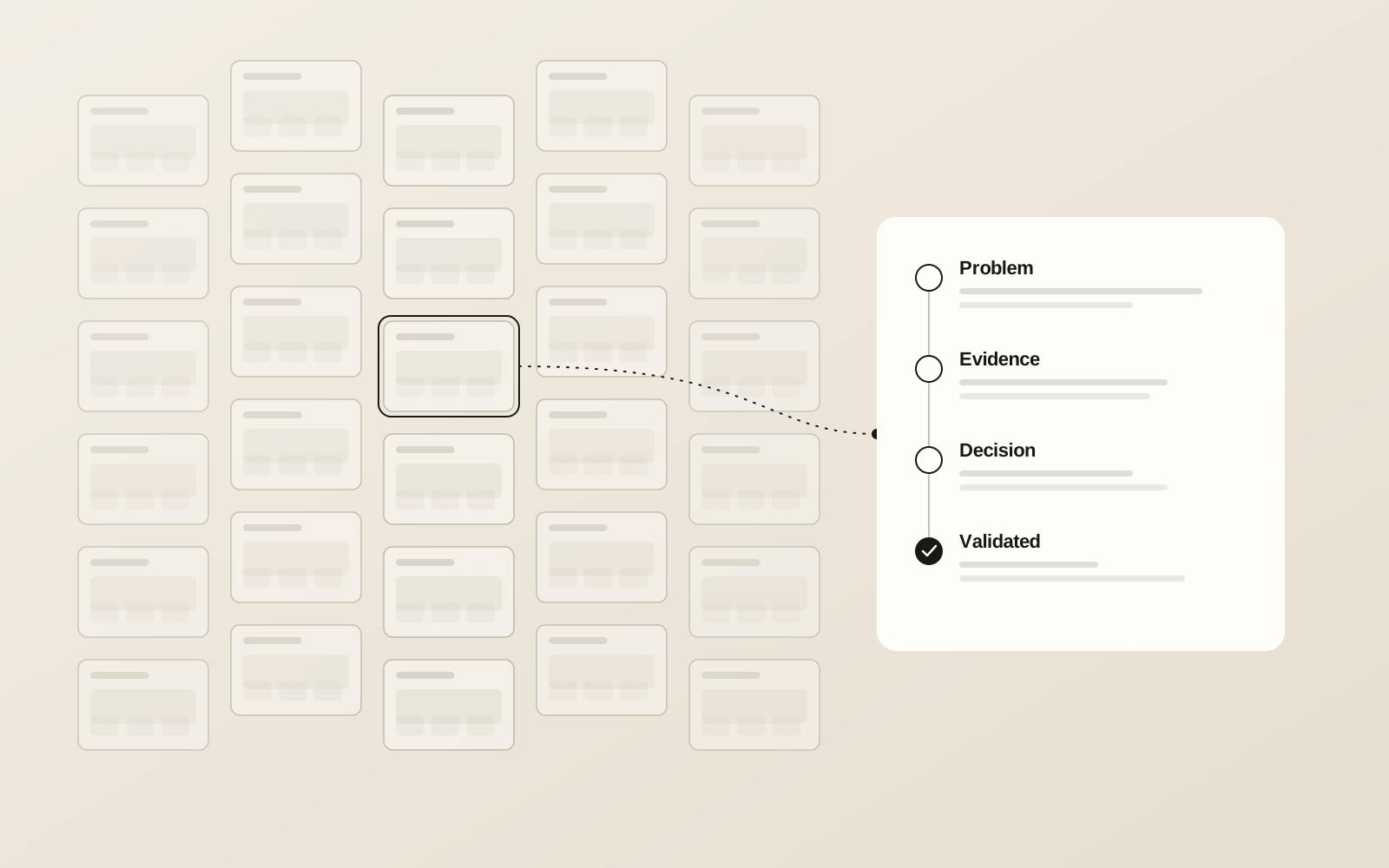
A strong case study should therefore communicate more than polished screens. It should show the connection between the problem, the evidence, the decisions, the iterations, and the outcome.
When an interviewer asks, “Why did you choose this solution?”, the answer should come from our understanding of the project—not merely from saying that AI recommended it.
That is how design judgment becomes visible.
A practical approach I want to follow
Going forward, I want to use AI with a more deliberate process:
Define the problem, users, context, and constraints before generating solutions.
Gather relevant evidence and identify what remains unknown.
Use AI to generate questions, alternatives, and possible directions.
Challenge the output, verify important claims, and compare options against the evidence.
Make informed decisions and translate them into usable experiences.
Test the solution, learn from feedback, and refine what does not work.
Explain the reasoning behind the decisions and the role AI played in the process.
This is not a rigid formula. It is a reminder to stay engaged with the thinking rather than rushing toward the deliverable.
Closing reflection
AI is changing how we work, and I believe learning to use it well is important for modern UX designers.
But learning the tools should not come at the cost of learning how to think.
The ability to frame problems, understand people, evaluate evidence, question recommendations, and explain decisions remains essential—not because AI cannot produce an interface, but because producing an interface is only one part of solving a problem.
I am still learning how to make this balance better in my own work. Some experiences have shown me what happens when I move too quickly; others have helped me build a more thoughtful approach.
I want to keep improving—not simply at creating things with AI, but at understanding what deserves to be created in the first place.
AI can help us make more things.
Our judgment determines which things are worth making.
That is the kind of UX designer I want to become.
Until the next reflection.